
Japandi Living Room ideas for Modern homes: Interior Trends 2026
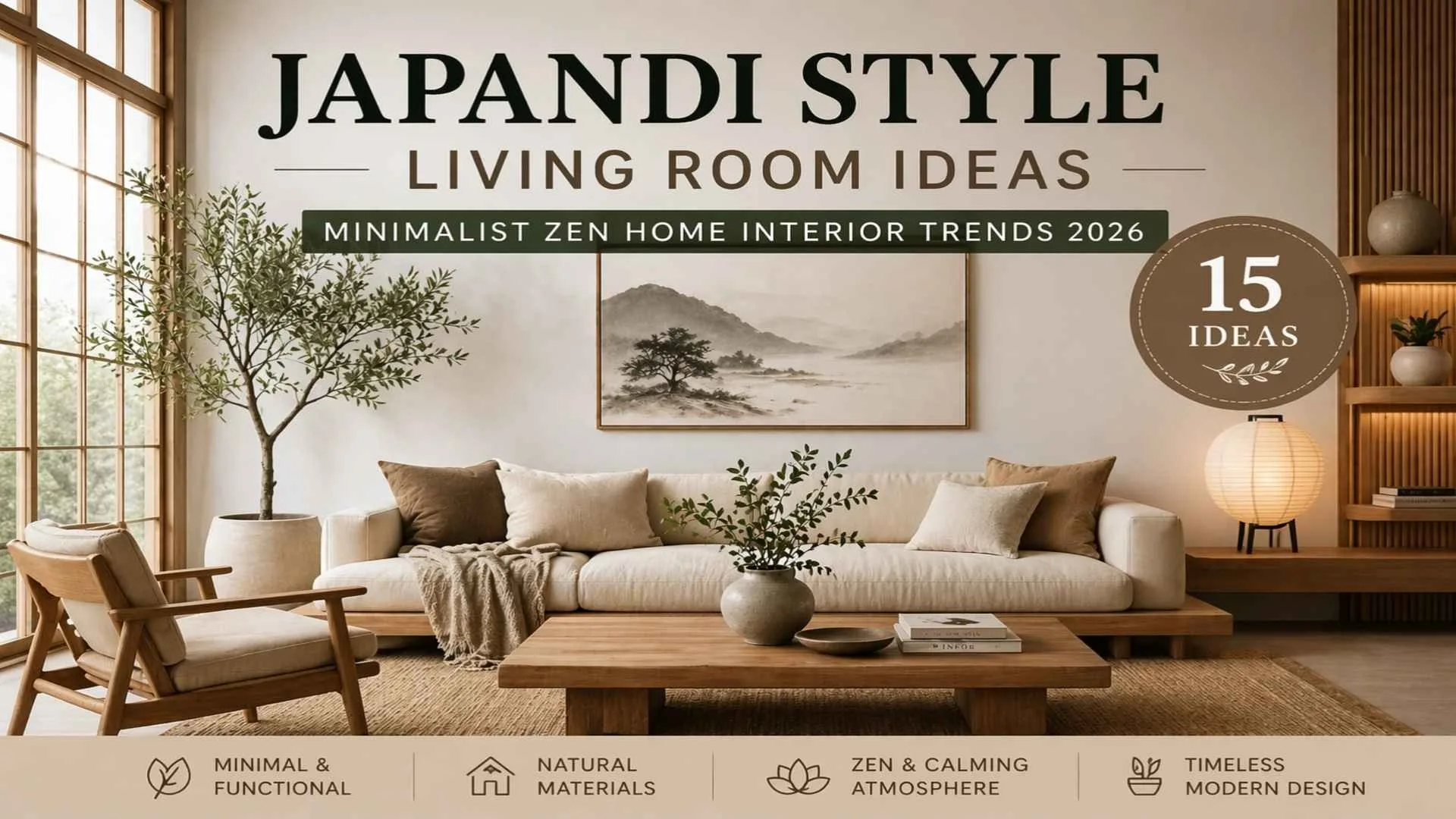
Japandi Living Room ideas for Modern homes are becoming a favorite choice in 2026 because they perfectly blend Japanese minimalism with Scandinavian warmth. The result is a calm, clutter-free, and deeply functional space that still feels cozy and inviting.
If you love interiors that feel natural, balanced, and effortlessly stylish — and you’re looking for more inspiration across all styles HomeDomio is your go-to resource.
Browse our full collection of living room decor ideas to find the perfect match for your home. Here are creative ways you can use these concepts to transform your space into a peaceful modern retreat.
1. Minimalist Neutral Japandi Color Palette
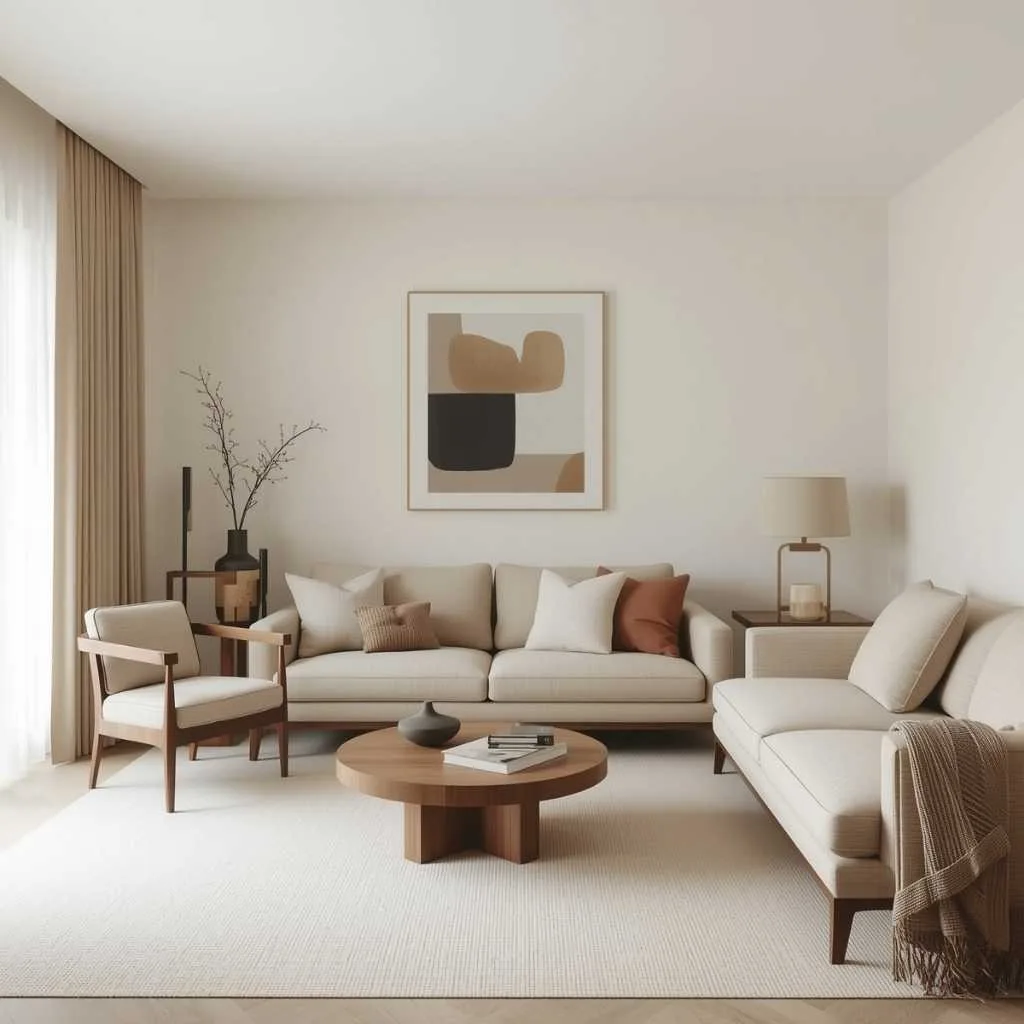
A Japandi living room starts with a soft, neutral color palette that sets a calming mood. Think warm beige, muted whites, soft greys, and earthy browns.
These tones create visual harmony and make the room feel open and airy. Avoid bold or overly bright colors, as Japandi style thrives on subtle elegance.
You can layer slightly darker shades for depth while maintaining a peaceful, balanced atmosphere throughout the space
2. Low-Profile Wooden Furniture Design
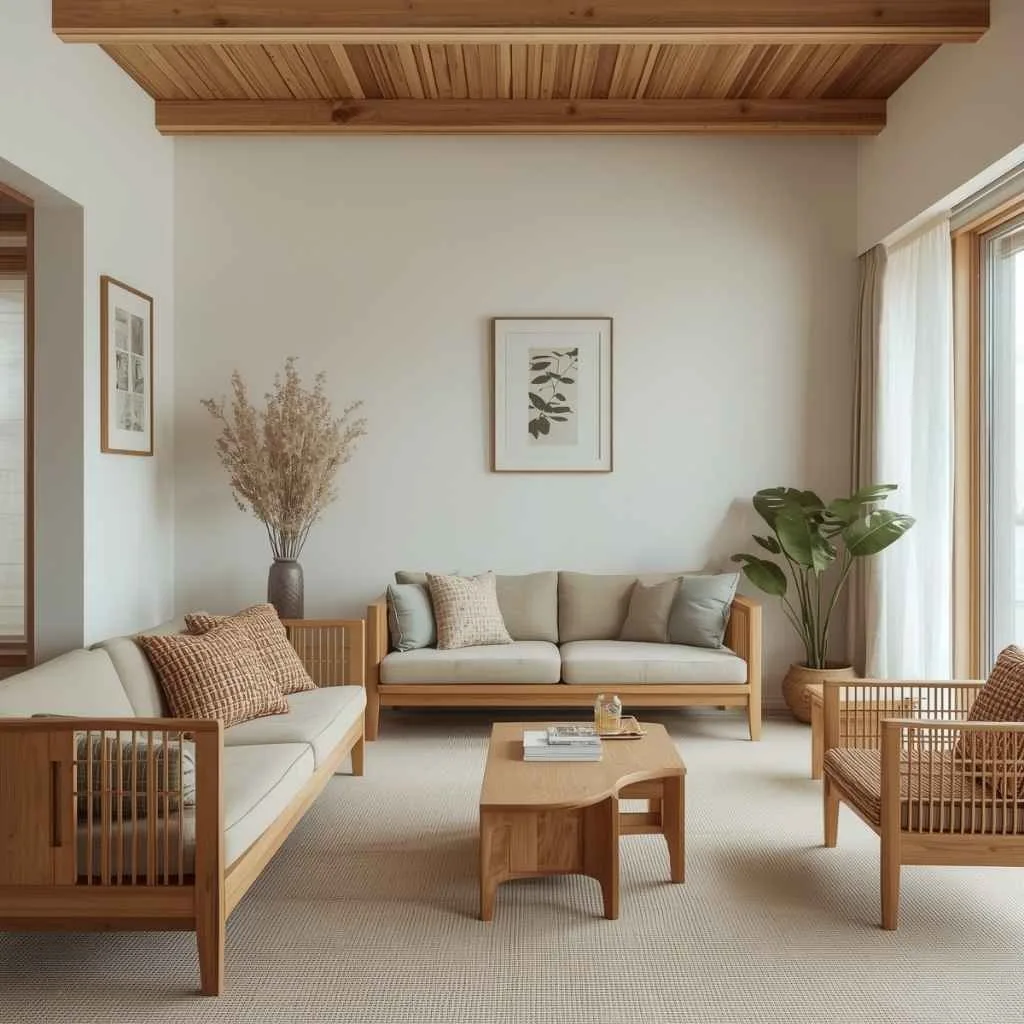
Low-height furniture is a signature element of Japandi interiors. Choose wooden sofas, coffee tables, and seating that sit closer to the floor to create a grounded and relaxed feel.
Natural wood finishes like oak or walnut work best. This style not only enhances comfort but also promotes simplicity and balance.
The lower perspective makes your living room feel more spacious and connected to the floor.
3. Natural Light Maximization Concept
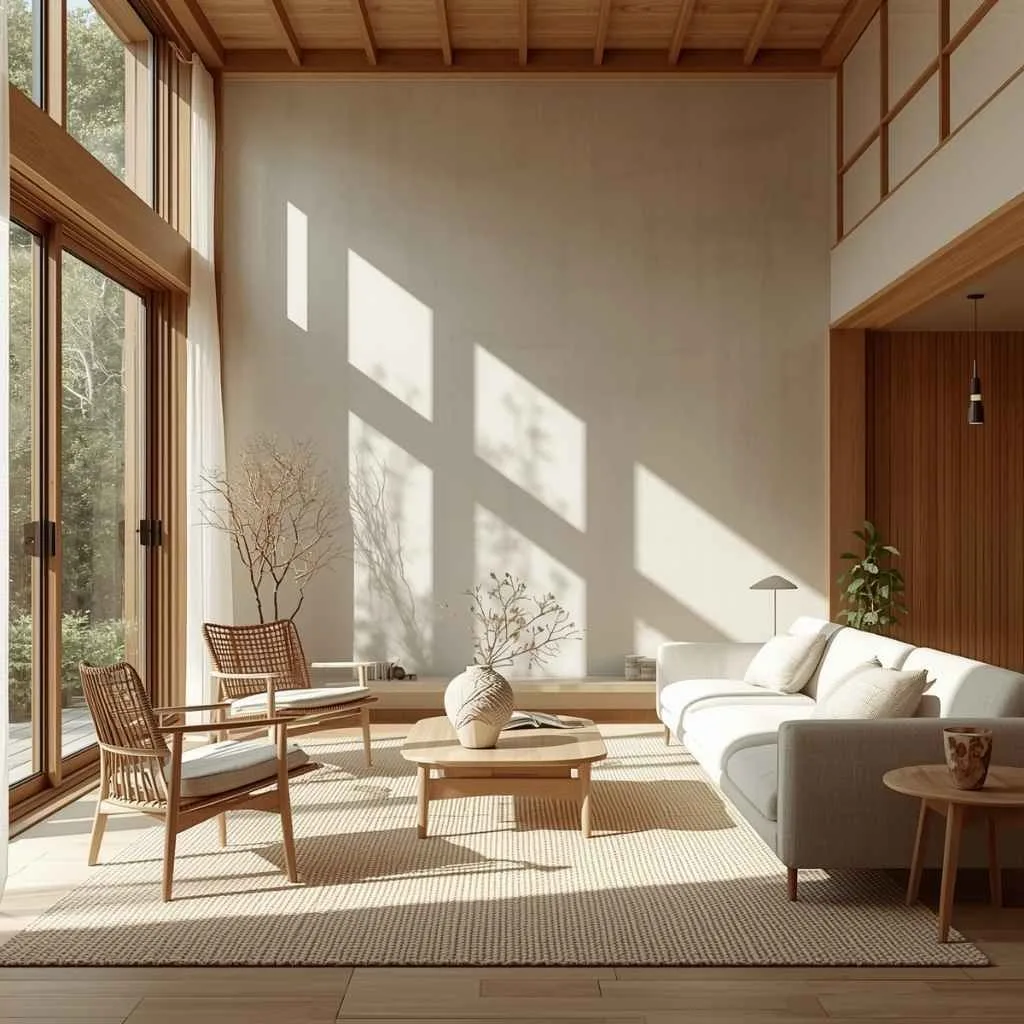
Japandi living rooms depend heavily on natural light to enhance their calming aesthetic. Large windows, sheer curtains, and open layouts help sunlight flow freely into the space.
Avoid heavy drapes that block brightness. Natural light highlights textures, soft tones, and organic materials, making the entire room feel more alive and refreshing.
The more daylight you allow in, the more peaceful and airy your living room becomes.
4. Tatami-Inspired Flooring Style
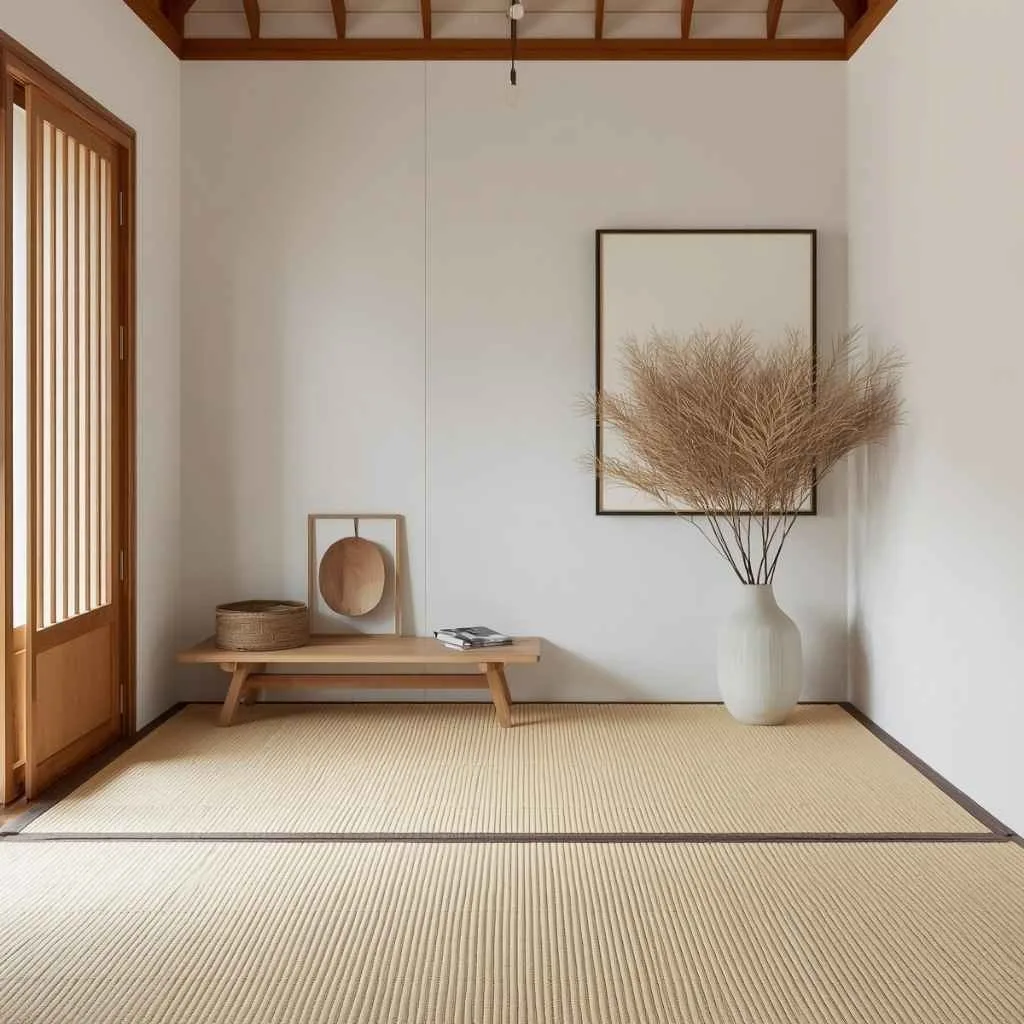
Inspired by traditional Japanese homes, tatami-style flooring brings warmth and authenticity to Japandi design. You can use woven mats or light wood flooring to achieve a similar effect.
This grounding base creates a natural flow in the room and encourages a more mindful lifestyle.
It also enhances the minimalist theme while offering a soft, comfortable surface that pairs beautifully with low furniture and neutral décor elements.
5. Indoor Plants for Zen Corners
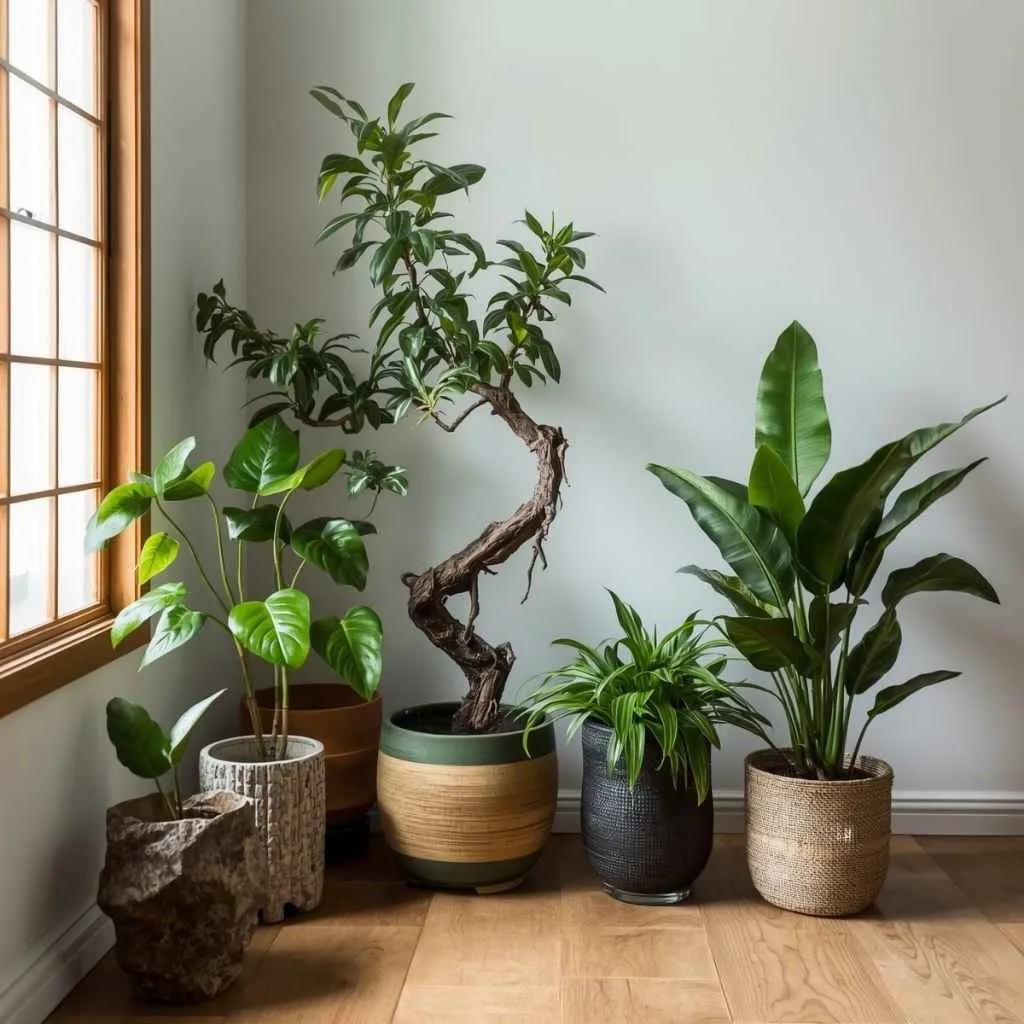
Adding greenery is essential in Japandi interiors, but it should be done thoughtfully. Choose simple, sculptural plants like bonsai, snake plants, or fiddle leaf figs.
Place them in empty corners or near windows to create natural balance. Avoid overcrowding the space with too many plants.
Each plant should feel intentional, contributing to a calming Zen atmosphere that connects your indoor living room with nature outside.
6. Textured Walls with Natural Finishes
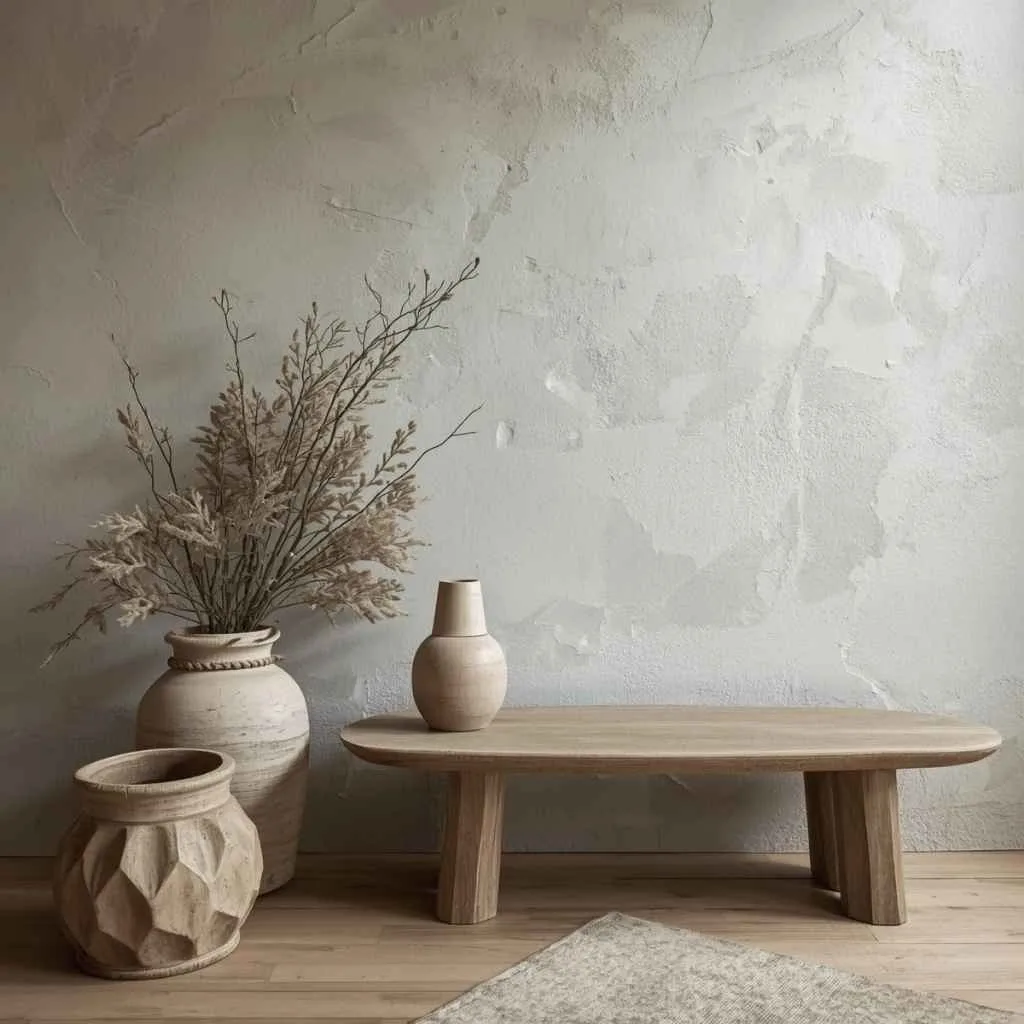
Instead of plain painted walls, Japandi design often includes textured finishes like limewash, plaster, or clay-based surfaces. These materials add depth without overwhelming the space. The subtle imperfections in texture create a natural, handcrafted feel that enhances warmth.Soft matte finishes work best, helping the room reflect light gently. If you love natural wall textures, you might also enjoy exploring plaster fireplace design ideas that carry this organic aesthetic into your focal wall. This design choice makes your living room feel organic, peaceful, and visually interesting without unnecessary decoration.
7. Open Shelving with Minimal Decor
Open shelving in Japandi living rooms is all about intentional styling. Instead of filling shelves with many objects, display only a few meaningful pieces such as ceramic vases, books, or wooden accents.
Keep arrangements balanced and uncluttered. Negative space is just as important as the items themselves.
This approach helps maintain visual calm while allowing each decorative piece to stand out beautifully.
8. Japanese Sliding Shoji Doors
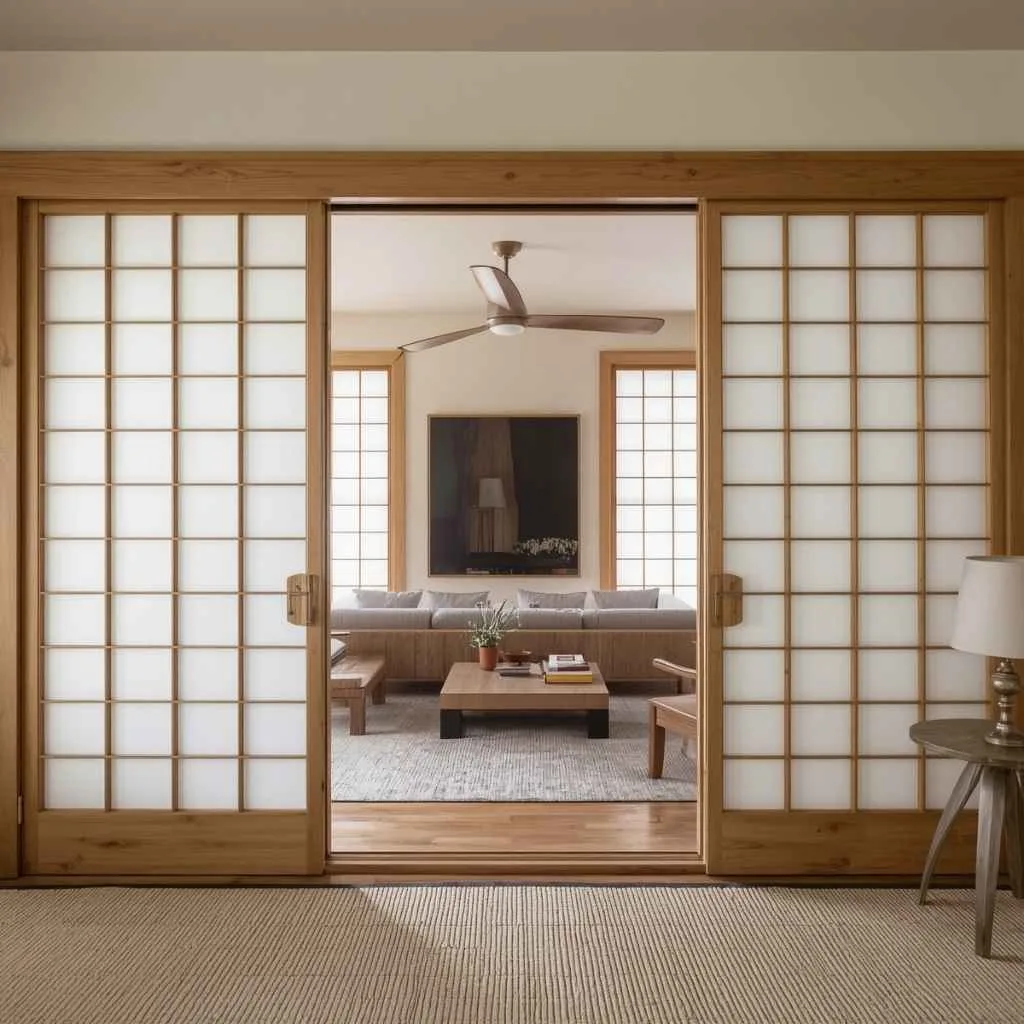
Shoji-style sliding doors are a classic Japanese feature that works beautifully in Japandi interiors.
Made with wooden frames and translucent panels, they allow soft light to pass through while dividing spaces gently. These doors save space and enhance flow within the home.
They also add an authentic architectural touch that blends seamlessly with Scandinavian simplicity, creating a functional yet visually elegant living room design.
9. Scandinavian Soft Textile Layering
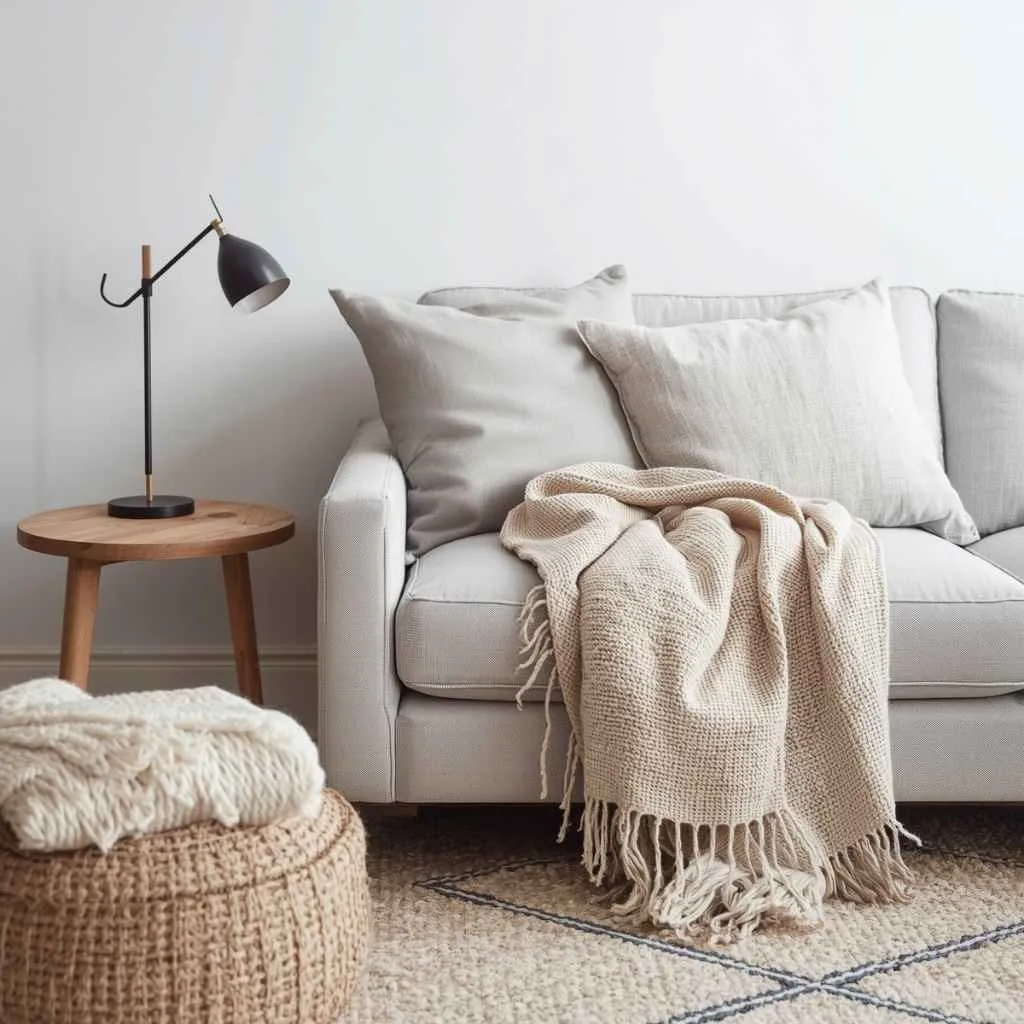
To balance Japanese minimalism, Japandi design incorporates soft Scandinavian textiles. Use linen cushions, wool throws, and cotton rugs in neutral tones.
Layering these fabrics adds warmth without creating clutter. Pairing them with the right cozy corner rug ideas can anchor your seating area beautifully while keeping the Japandi aesthetic intact.
The key is subtle comfort nothing too bold or heavy. These textiles make the living room feel inviting and cozy, while still maintaining the clean, structured aesthetic that defines Japandi interiors.
10. Balanced Wood and Stone Elements
A strong Japandi living room often combines natural wood with subtle stone elements. Wooden furniture brings warmth, while stone accents like coffee tables, vases, or wall textures add grounding contrast. This balance reflects nature’s harmony, which is central to Japandi philosophy. Keeping materials raw and natural ensures the space feels authentic, calming, and connected to organic elements without unnecessary artificial finishes.
11. Statement Paper Lantern Lighting
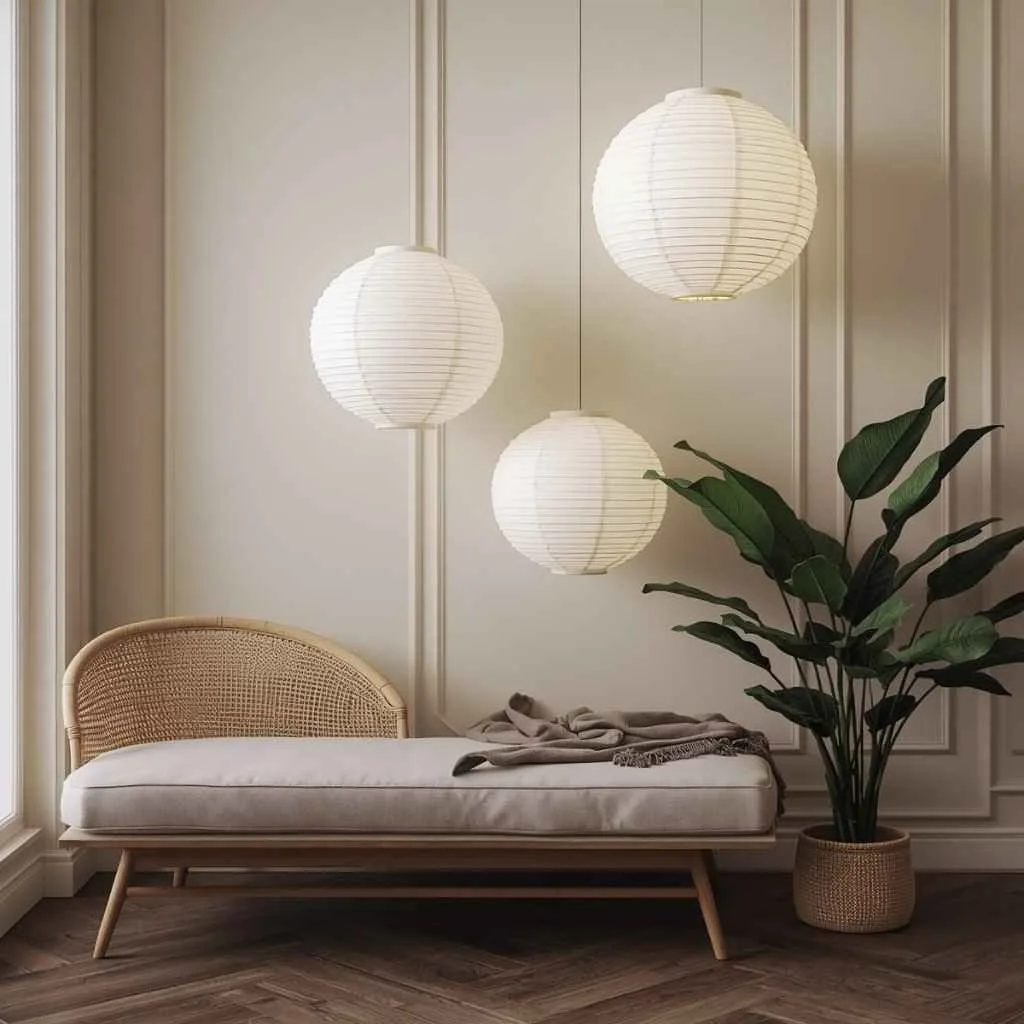
Lighting plays a huge role in Japandi interiors, and paper lanterns are a perfect choice. Their soft, diffused glow creates a calm and cozy atmosphere.
Choose simple, round or oval designs in white or beige tones. Avoid harsh lighting fixtures. Instead, opt for warm, ambient lighting that enhances relaxation.
A well-placed paper lantern can become a subtle focal point without overpowering the room.
12. Clutter-Free Hidden Storage Solutions
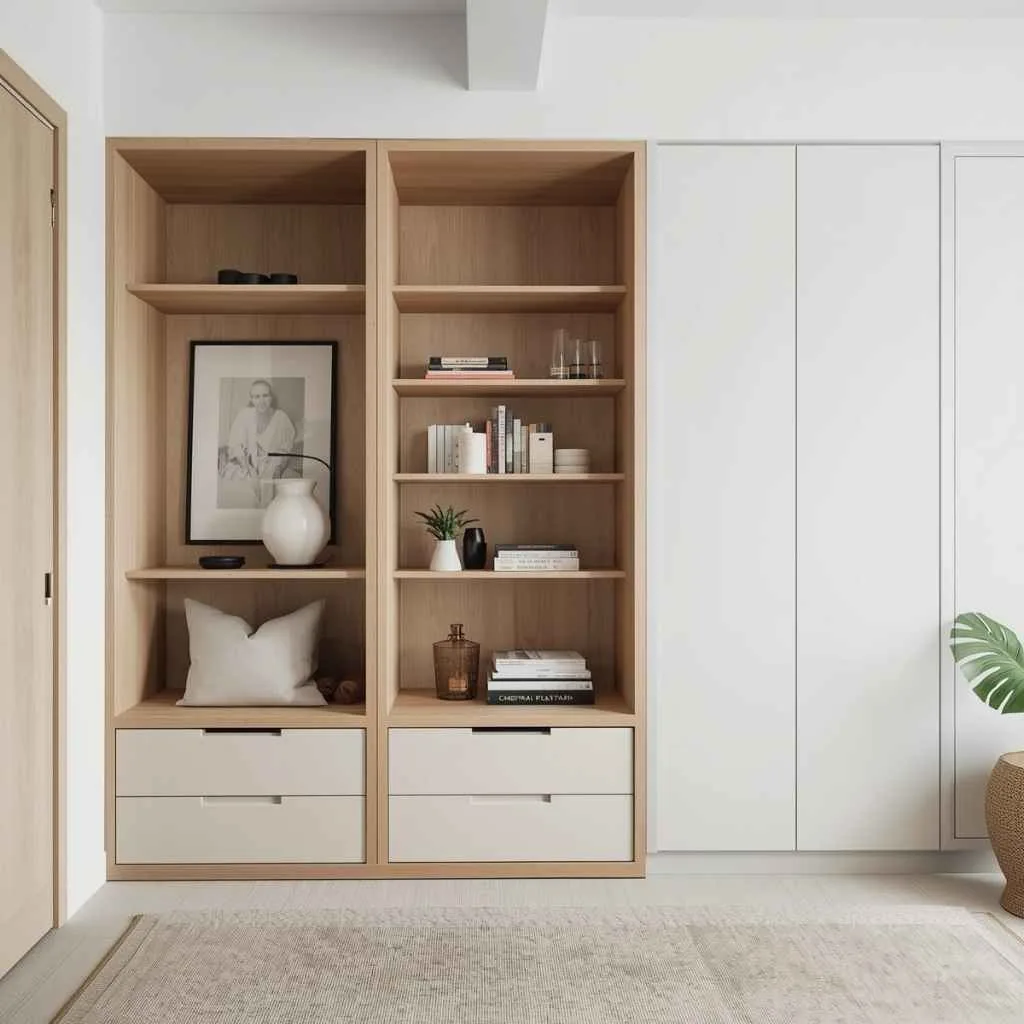
Japandi design is all about keeping spaces visually clean, so hidden storage is essential. Use built-in cabinets, minimalist storage benches, and closed shelving to hide everyday items.
This helps maintain a tidy and peaceful environment. Everything should have a place, and nothing should feel exposed or chaotic.
The goal is to create a living room where simplicity and organization naturally support daily comfort.
13. Earthy Ceramic and Handmade Accents
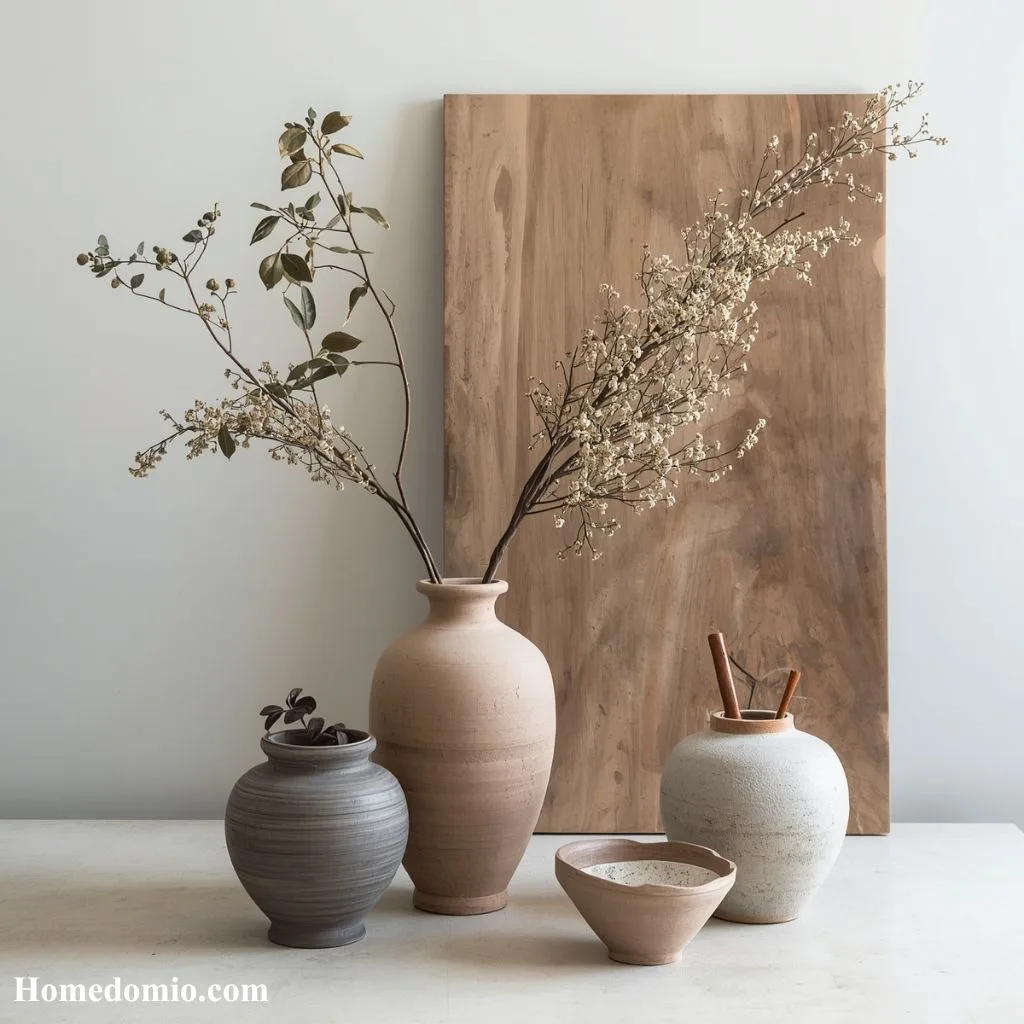
Handmade ceramic décor pieces bring authenticity and warmth into Japandi living rooms. Choose vases, bowls, or sculptures in earthy tones like clay, sand, or soft grey.
These imperfect yet beautiful items reflect craftsmanship and simplicity. Avoid shiny or overly decorative objects. Instead, focus on natural textures and organic shapes that enhance the calming, grounded feeling of your living space.
14. Cozy Floor Seating Reading Nook
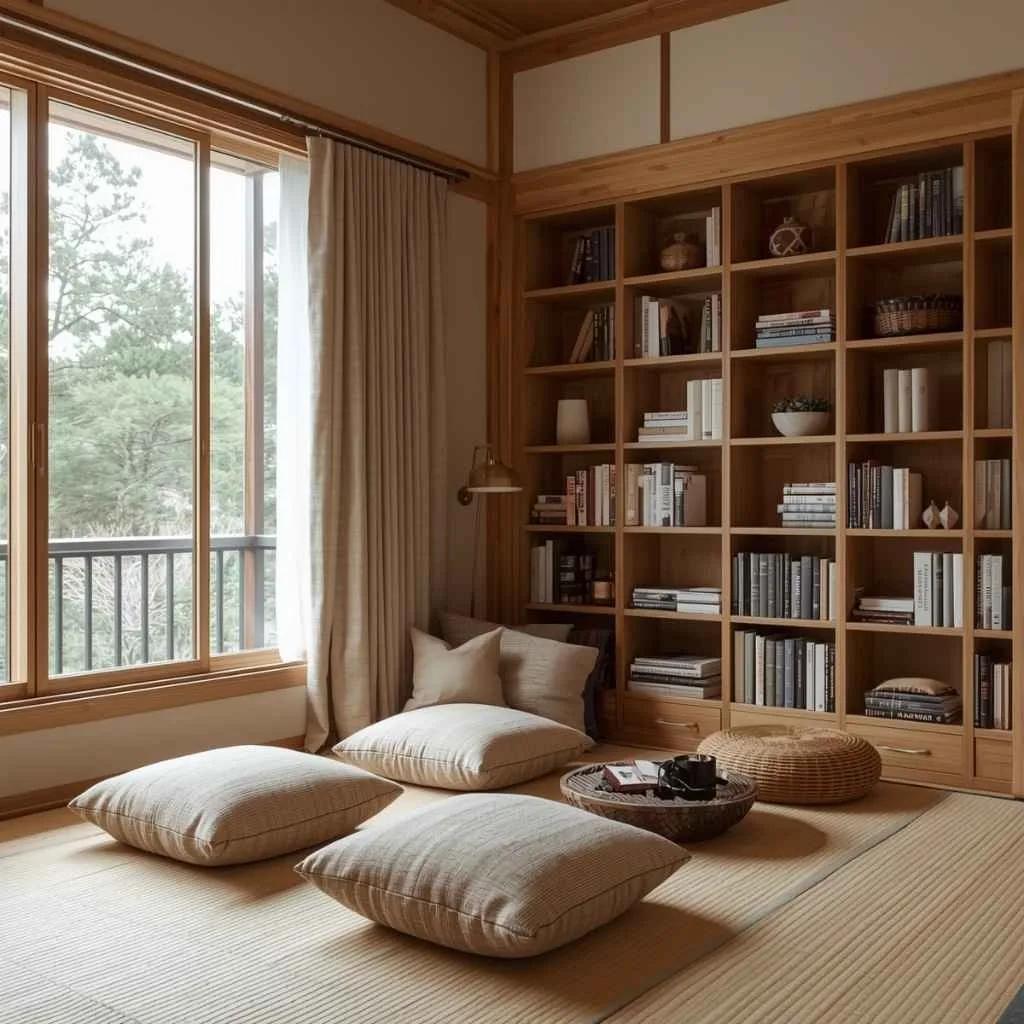
Creating a floor seating area adds a traditional Japanese touch to your living room. Use soft cushions, low stools, or floor chairs placed near a window or bookshelf.
This cozy nook becomes a perfect space for reading or relaxing. For more ways to style unused spaces, check out these living room corner decor ideas that work to make every inch of your room intentional.
Keep the design minimal with neutral tones and natural fabrics. It encourages mindfulness and offers a quiet retreat within your Japandi-inspired home.
15. Nature-Inspired Minimal Artwork
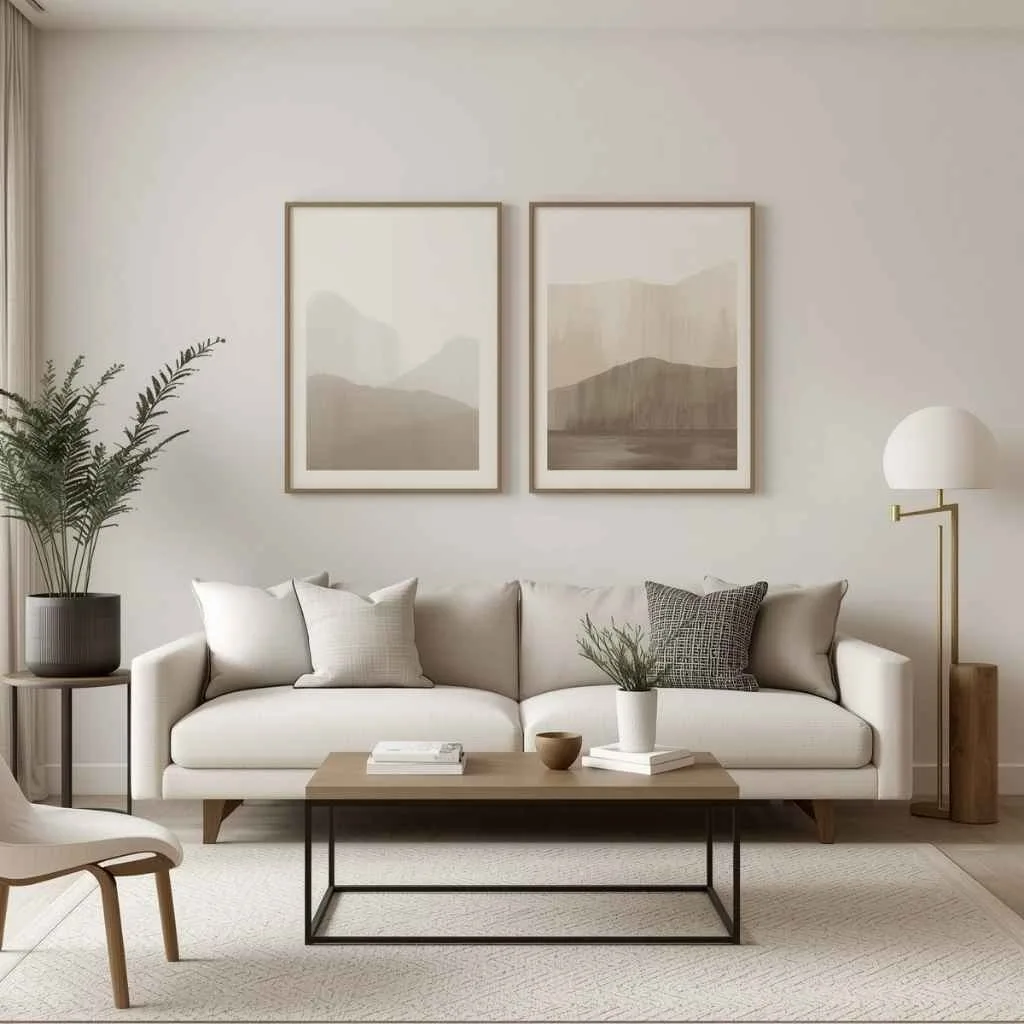
Artwork in Japandi living rooms should be simple, subtle, and nature-inspired. Choose abstract prints, line drawings, or landscapes in muted tones.
Frames should be wooden or black metal for a clean look. Avoid overly bright or busy designs. The goal is to enhance the space without distracting from its calm atmosphere.
Each piece should complement the room’s balance and reinforce its connection to nature.
Conclusion
Japandi living room design is all about balance between comfort and simplicity, nature and structure, tradition and modern living.
By focusing on natural materials, soft tones, and minimal yet intentional décor, you can create a space that feels peaceful and timeless. For a deeper dive into simplicity-driven styling, explore our minimalist living room ideas that complement the Japandi philosophy perfectly.
Each idea above helps you build a living room that is not just visually beautiful but also emotionally calming and highly functional for modern life.
