
Minimalist Living Room Ideas: Your Guide to a Calmer, Cooler Space

Let’s be honest most of us have stared at our cluttered living rooms and thought, “How did it get like this?” The good news? You don’t need a complete renovation or a massive budget to turn things around. These minimalist living room ideas are all about making intentional choices: keeping what serves you, letting go of what doesn’t, and creating a space that actually feels good to be in. Whether you’re starting from scratch or just looking to refresh what you’ve got, these ideas will help you build a room that’s calm, stylish, and unmistakably you.
1. 🎨 Start With a Neutral Color Palette That Breathes

Color sets the emotional tone of any room, and in minimalist design, neutrals are your best friends. Think warm whites, soft greiges, sandy taupes, and cool grays. These shades don’t compete with each other they cooperate. The result is a room that feels open, airy, and naturally restful. You can always layer in texture and warmth through fabrics and natural materials. The key is to stick to a palette of two or three tones max and let them do the heavy lifting throughout the space.
2. 🛋️ Choose a Single Statement Sofa and Let It Shine

In a minimalist living room, your sofa is the star of the show so choose one that earns the spotlight. Go for a clean-lined silhouette in a solid, high-quality fabric like linen, boucle, or leather. Avoid sofas with overly ornate legs, excessive throw pillows, or busy patterns. One beautiful, well-proportioned sofa in the right color can define the entire aesthetic of the room. Pair it with just two or three complementary cushions and resist the urge to pile on more. Less really is more here.
3. 🤍 Embrace the Power of Negative Space

Here’s a concept that feels counterintuitive at first: the empty parts of your room are just as important as the filled parts. Negative space the breathing room around and between furniture is what gives a minimalist room its sense of calm and openness. Resist the urge to fill every corner or surface. Leave that stretch of open floor. Let that wall stay bare. When objects have room to exist without crowding each other, they become more visually impactful, and the whole room feels more intentional and considered.
4. 📚 Go Floating With Wall-Mounted Shelving

Wall-mounted shelves are a minimalist designer’s secret weapon. They provide storage and display space without eating up precious floor area, which instantly makes a room feel larger and less cluttered. Choose shelves in natural wood or matte black metal for a clean, modern look. The real trick is in how you style them keep it sparse. A few books, one or two small plants, a single sculptural object. Negative space applies to shelves too. Less on the shelf means every item you do display feels curated and meaningful.
5. 🪑 Invest in Multi-Functional Furniture

When every piece of furniture serves more than one purpose, you can own less without sacrificing comfort or practicality. Think ottomans with hidden storage inside, coffee tables with lower shelves or drawers, sofas that convert to guest beds, or nesting side tables that tuck away when not in use. Multi-functional furniture is particularly brilliant in smaller living rooms where space is at a premium. It keeps your room looking streamlined and uncluttered while secretly packing in all the function you need day to day.
6. Use Natural Materials to Add Warmth Without Clutter

One of the biggest misconceptions about minimalism is that it has to feel cold or sterile. It absolutely doesn’t. Natural materials raw wood, rattan, linen, jute, stone, and leather bring incredible warmth and texture into a room without adding visual noise. A chunky wooden coffee table, a woven jute rug, or a linen throw can make a neutral room feel inviting and lived-in. These materials also age beautifully, which means your room gets more character over time rather than looking tired or dated.
7. 🖼️ Curate Your Art: One Bold Piece Over Many Small Ones

Minimalist rooms and gallery walls are not natural companions. Instead of scattering multiple small frames across your walls (which tends to feel busy and scattered), choose one large, bold piece of art and let it command the room. A single oversized canvas, a large-format photograph, or a striking print creates a focal point that draws the eye and anchors the space. Make sure the piece genuinely resonates with you in a minimalist room, art gets a lot of attention, so it should be something you truly love.
8. ☕ Keep Your Coffee Table Intentionally Styled

The coffee table is one of the most tempting spots for clutter to accumulate remotes, magazines, snacks, candles, and random odds and ends. In a minimalist living room, treat your coffee table as a curated display rather than a dumping ground. Pick a simple tray and group two or three objects inside it: a small plant, a candle, one beautiful book. The tray creates visual order and makes it easy to clear the table quickly when needed. Everything else gets stored away in baskets, drawers, or cabinets.
9. ☀️ Let in As Much Natural Light As Possible

Nothing opens up a room quite like natural light. In a minimalist space, light becomes a design element in itself , it shifts throughout the day, casts beautiful shadows, and gives the room a dynamic, living quality. Maximize it by keeping window treatments sheer or minimal, choosing light-colored walls that reflect rather than absorb light, and placing mirrors strategically to bounce it further into the room. If you have heavy curtains, swap them out for linen sheers or simple roller blinds in a neutral tone. The difference will be immediate and dramatic.
10. 📺 Declutter Your Media Setup With Cord Management

Nothing breaks the calm of a minimalist living room faster than a tangle of visible cords and cables trailing from your TV setup. Take the time to manage your media area properly mount your TV on the wall, use cable management channels or in-wall cord covers, and invest in a sleek media console with closed storage to hide devices, remotes, and accessories. Wireless speakers and minimalist-designed tech products are worth the investment too. When your media setup is clean and organized, it becomes part of the aesthetic rather than a distraction from it.
11. 🌿 Add Life With Just One or Two Statement Plants

Plants bring life, color, and a sense of calm into any room but in a minimalist space, restraint is key. Rather than filling every corner and shelf with small potted plants, choose one or two larger specimens that can hold their own as design elements. A tall fiddle leaf fig, a sculptural snake plant, or a trailing pothos in a beautiful ceramic pot can completely transform a corner of the room. Large plants also have a grounding quality that makes a space feel more complete, without requiring any additional decoration around them.
12. 🏠 Choose Rugs That Define Without Dominating

A rug grounds the furniture arrangement and adds warmth underfoot, but in a minimalist room, the wrong rug can overwhelm the entire aesthetic. Opt for rugs in solid colors, subtle textures, or very simple geometric patterns. Natural fiber rugs jute, sisal, or wool in neutral tones are a perennially safe and stylish choice. Make sure the size is right too: a rug that’s too small makes the room feel disjointed and awkward. As a general rule, all front legs of your main furniture should rest on the rug.
13. 🗄️ Use Closed Storage to Hide the Everyday Mess
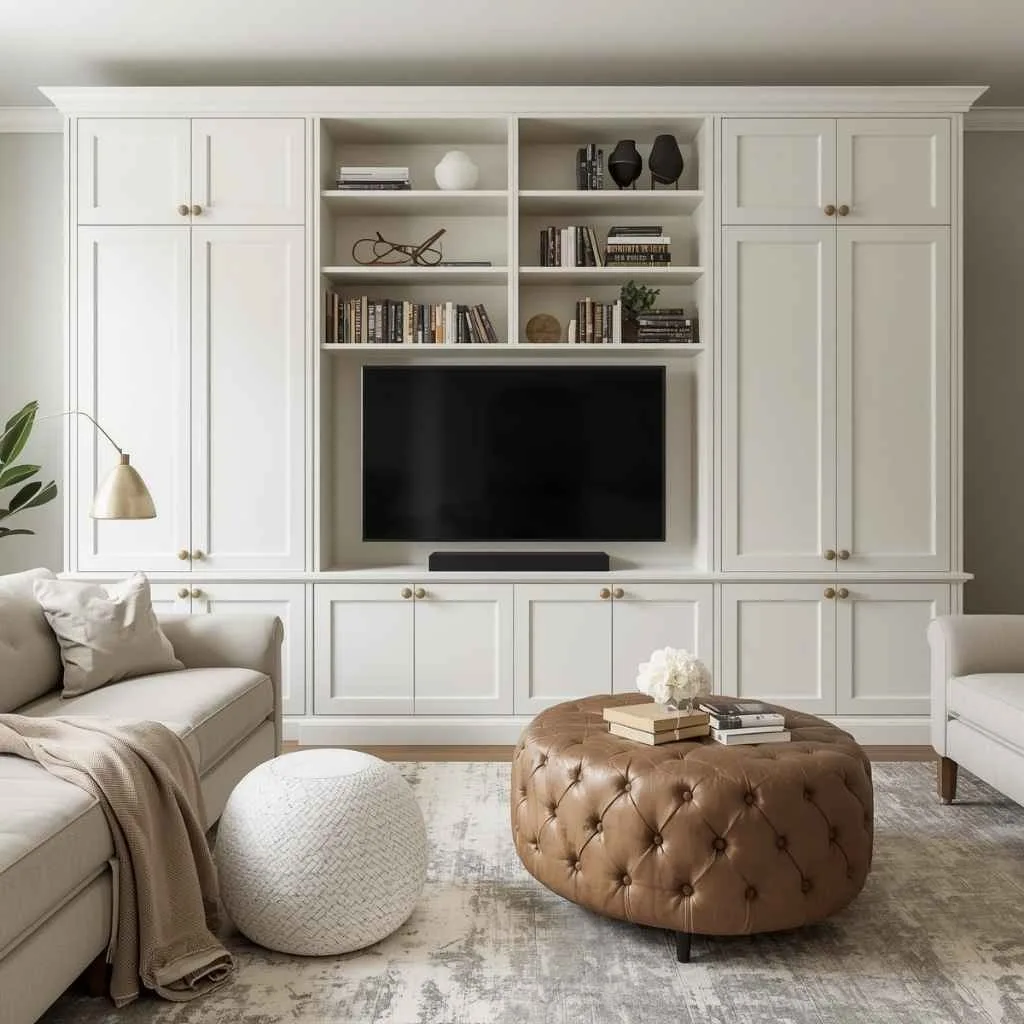
Minimalism isn’t about having nothing , it’s about not showing everything. Closed storage is what makes it possible to live realistically in a minimalist room without sacrificing the aesthetic. Think media consoles with doors, sideboards, storage ottomans, and built-in cabinetry. Everything that doesn’t have display value books you’re currently reading, gaming controllers, charging cables, blankets goes behind a door. When you can put away the everyday clutter in seconds, maintaining that clean, calm look becomes effortless rather than exhausting.
14. 🎨 Play With Tone-on-Tone Textures for Depth

A common fear with minimalist color palettes is that they’ll look flat or boring. The solution is tone-on-tone layering: using different textures in the same color family to create subtle depth and visual interest without adding busyness. Imagine a cream sofa with a cream boucle throw, a woven ivory cushion, and a light natural wood side table. Each element is in the same tonal range, but the mix of textures smooth, loopy, woven, matte gives the composition richness and warmth. It’s a sophisticated technique that’s endlessly rewarding to experiment with.
15. 💎 Prioritize Quality Over Quantity in Every Purchase

This is perhaps the most fundamental principle of minimalist living room design: buy less, but buy better. Instead of filling your space with multiple affordable pieces, save up for one well-made item at a time. A beautifully crafted sofa, a solid wood coffee table, or a handmade ceramic lamp will serve you better aesthetically and practically for years to come. High-quality pieces also tend to have cleaner designs, better proportions, and more timeless appeal, which means they’ll never look out of place no matter how your tastes evolve over time.
✨ Conclusion
Minimalist living room design isn’t about perfection it’s about intention. Start small, make thoughtful choices, and remember that every item you remove creates space for clarity and calm. You don’t need to overhaul everything overnight. Pick one idea, try it, and notice how it feels. A simpler space truly leads to a simpler, more peaceful mind.
